

如对产品或服务有任何疑问,或需举报侵权行为,请联系:Branding@streamax.com
The Streamax Passenger P3D Intelligent Statistics System overcomes traditional data blind-spots in bus fleet operations by delivering full origin-destination (OD) insight through accurate boarding/alighting detection and onboard edge analytics. This empowers operators with payment-agnostic passenger flow data — enabling optimized route planning, cost reduction, and improved service quality, based on complete and reliable ridership intelligence.
Many bus systems today still rely on fare-collection or tap-on data, which typically record only boarding events. Alighting data, cash riders, and transfer flows remain largely invisible, distorting actual passenger journeys. This fragmented view prevents transit agencies from understanding true demand, impairing efficient route design and resource deployment. The shift now must be toward holistic journey analytics — where every boarding, every exit, every movement feeds into planning with full transparency.
Bus operators routinely face critical, intertwined challenges:
Incomplete Demand Visibility — Fare-collection data fails to reveal cash passengers, alighting stops, and transfers; resulting in inaccurate OD matrices and skewed demand estimates.
Inefficient Resource Deployment — Without real-time or historical OD data, bus scheduling and deployment rely on rough estimates or outdated assumptions — causing overcrowding on busy lines and under-utilization on others, thereby wasting fuel, labour, and capital.
Costly and Error-Prone Manual Counting — Traditional manual headcounts or surveys are labor-intensive, slow, prone to human error, and cannot support dynamic decision-making in modern transit operations.
The Passenger P3D system from Streamax tackles these problems with a solution grounded in real-world operational needs:
True Passenger Flow Tracking — Advanced sensors/cameras combined with onboard algorithms detect and distinguish boarding vs. alighting events reliably, avoiding double-counting and generating accurate stop-level load data. This aligns with recent research validating video-based or sensor-based automatic passenger counting (APC) as feasible and accurate in real transit settings.
Onboard Real-Time Analytics & Alerts — Edge-processing enables real-time load factor monitoring and alerts for overcrowding or demand surges, supporting dynamic dispatch adjustments and proactive congestion management.
Adopting Passenger P3D yields tangible operational benefits:
Cost Reduction — By aligning vehicle deployment with verified demand, operators can cut unnecessary fuel and labor costs associated with under- or over-deployment.
Service Quality Improvement — Balanced loads, reduced wait times, less overcrowding — boosting rider satisfaction, retention, and system reliability.
Evidence-Based Planning — Reliable OD analytics enable agencies to shift from intuition to data-driven decisions, facilitating informed route design, capacity planning, and long-term network optimization.
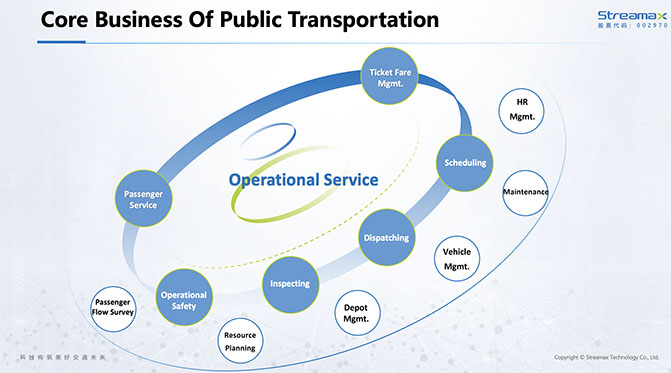
As public transit evolves under pressure for efficiency, sustainability, and rider satisfaction, complete passenger journey visibility becomes a critical differentiator. Streamax’s Passenger P3D is not just a counting tool — it’s a foundational engine for intelligent, resilient, and adaptive transit networks. With full journey intelligence, fleets can transition from reactive fixes to predictive, optimized operations — turning today’s ridership data into tomorrow’s competitive advantage.
Chen, X., Cheng, Z., & Sun, L. (2024). Bayesian Inference of Time-Varying Origin-Destination Matrices from Boarding/Alighting Counts for Transit Services. arXiv.
Liu, X., Van Hentenryck, P., & Zhao, X. (2019). Optimization Models for Estimating Transit Network Origin-Destination Flows with AVL/APC Data. arXiv.
Hsu, Y.-W., Chen, Y.-W., & Perng, J.-W. (2020). Estimation of the Number of Passengers in a Bus Using Deep Learning. Sensors, 20(8), 2178.
“Video-based automatic people counting for public transport: On-bus versus off-bus deployment.” Computers in Industry, 2025.
Su, P., & Dai, Z. (2013). Bus Passenger Origin-Destination Matrix Estimation Using Available Information from Automatic Data Collection Systems in Chongqing, China. Advanced Materials Research, 779-780, 878–889.
*产品性能、规格及相关数据基于理论计算得出。由于生产批次、软件版本、使用场景及运行环境等因素的不同,实际性能可能有所差异。
*产品特性、功能及服务可能因各地区法律法规及市场情况不同而有所差异。产品的实际可用性及外观以当地情况为准。
*本网站提供的所有产品相关信息仅供参考,不构成任何具有法律约束力的承诺、保证或声明。锐明保留在不另行通知的情况下随时修改产品信息的权利。
*所有产品性能、规格及其他相关信息均以实际产品为准。
*本网站所有内容,包括但不限于文字、图片、视频、图形、标识及版式设计,均受相关法律保护,归锐明或其权利人所有。未经事先书面许可,不得以任何形式复制、传播或用于商业用途。
如对产品或服务有任何疑问,或需举报侵权行为,请联系:Branding@streamax.com